

Not all rest actually restores. Sometimes it just delays the crash.
In this solo episode of Embracing Intensity, I talk about what shifted for me when I went back to working full-time in schools, and why having less free time pushed me to get more intentional about how I use my energy.
I used to focus a lot on trying to do the “right” things—eat better, exercise more, use my time more efficiently—but I kept ending up exhausted anyway. What started to change things was paying closer attention to what actually gave me energy versus what drained it.
This episode is where I walk through that shift and share the RECHARGE framework I’ve been using—looking at energy across physical, mental, emotional, social, and connection areas. It’s less about fixing everything and more about noticing patterns and making small adjustments that actually stick.
About Aurora
Aurora Remember Holtzman is a neurodivergent educator, coach, and host of the Embracing Intensity podcast. She supports gifted, creative, and outside-the-box thinkers in understanding their energy, working with their nervous systems, and building more sustainable ways of living and creating.
 Spotify
 Apple Podcasts
 iHeartRadio
 Amazon Music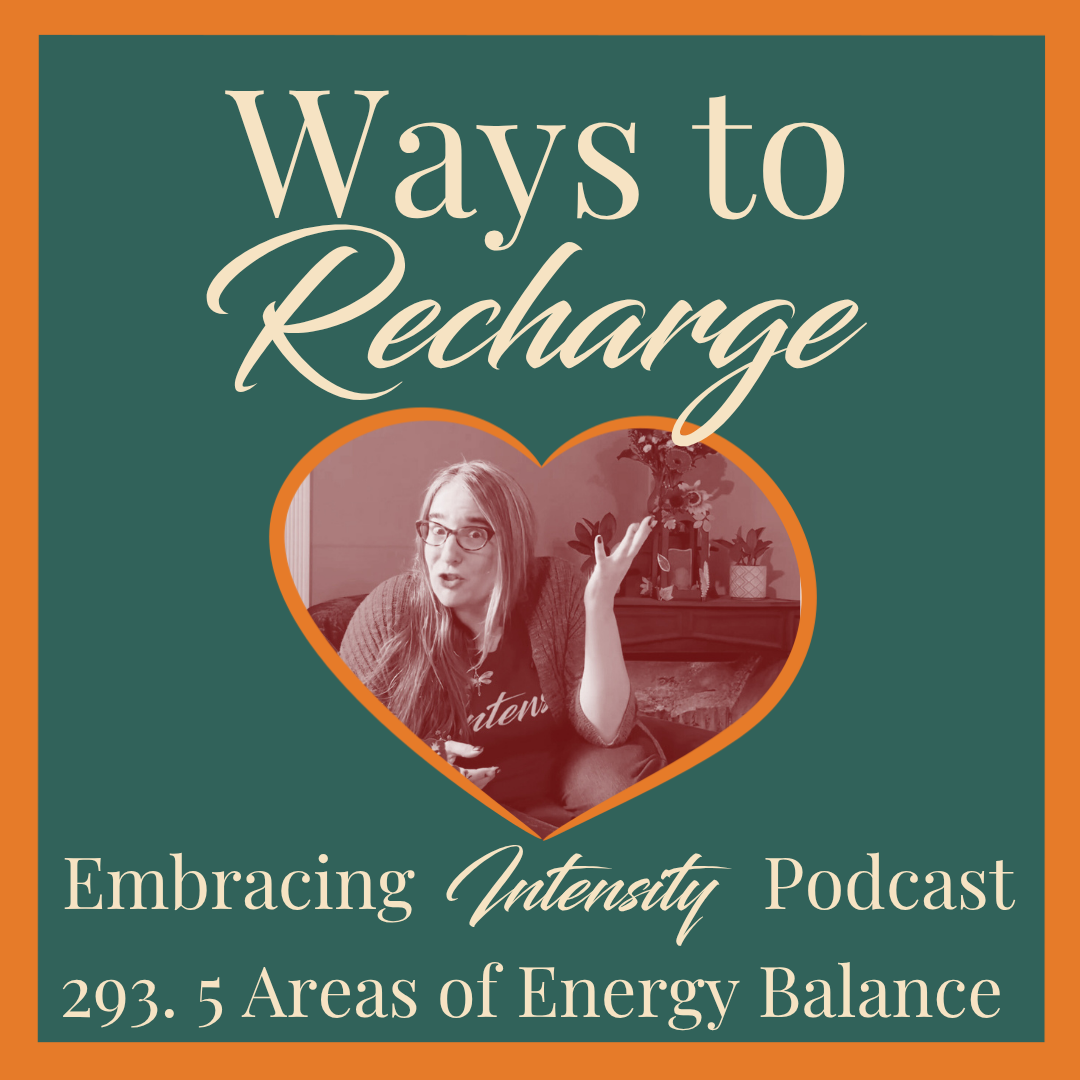
Explore More!
Giftedness * Identity * Intensity * Neurodivergence * Positive Disintegration * Relationships * Self Care * Self Regulation * Twice Exceptionality
In This Episode
- Why some kinds of “rest” don’t leave you feeling any better
- What changed when I stopped focusing on time and started looking at energy
- The idea of “contaminated time” and why it feels so unsatisfying
- How I’ve been approaching burnout differently this year
- The five areas of energy and how they show up in daily life
- Small ways to shift your energy without overhauling everything
- Why play, curiosity, and creativity matter more than we think
- How alignment in your environment and relationships affects your energy
The Five Areas of Energy
This episode looks at five different areas that all impact how recharged (or depleted) you feel. You don’t need to overhaul all of them—just noticing where something feels off can be enough to start.
Physical Energy
This includes the obvious things like sleep and movement, but also how your body feels in your environment and routines. Small shifts—like changing positions, stepping outside, or actually finishing a task you’ve been avoiding—can make a noticeable difference.
Mental Energy
The way your brain is engaged matters. Too much stimulation can be overwhelming, but too little can leave you stuck. Play, challenge, and creative thinking can all help shift your energy in ways that feel more engaging.
Emotional Energy
Emotional fatigue doesn’t always look dramatic. Sometimes it shows up as irritability, numbness, or just feeling off. Letting yourself process things—through expression, movement, or even just naming what’s there—can ease that buildup.
Social Energy
Some interactions leave you feeling more like yourself, and some leave you drained. This section looks at things like masking, belonging, solitude, and what it feels like to be around people where you don’t have to explain yourself.
Connection Energy
Even when you’ve rested, you can still feel disconnected. This area looks at things like purpose, ritual, time in nature, and moments that help you feel part of something beyond your day-to-day tasks.
Transcript
* Rough Transcript *
Recharge
Aurora: your brain needs play the way your body needs sleep.
Play gives us an opportunity for exploration without high stakes.
It engages your brain differently than work or consumption.
You don’t need to be good at it. Just curious.
Anything you do for joy without a specific purpose can be play.
Welcome to the Embracing Intensity podcast. I’ll be sharing interviews and tips for gifted, creative, twice exceptional, and outside the box thinkers who use their fire in a positive way. My name is Aurora Remember Holtzman. After years of feeling too much, I finally realized that intensity is the source of my greatest power.
Now, instead of beating myself up about not measuring up to my own self imposed standards. I’m on a mission to help people embrace their own intensity and befriend their brains so they can share their gifts with the world through the Embracing Intensity community, coaching, educational assessment, and other tools to help you use your fire without getting burned.
You can join us at embracingintensity. com.
Intro
Aurora: Hello. Today’s episode was a long time coming. I recorded over my mid-winter break and had some technical difficulties with the end, and once I finally got it all recorded, I. Decided to revamp my Power Zone toolkit into the RECHARGE toolkit, but I kind of got stuck in that part of where redoing something that already existed is more of a pain than just starting something new.
So I still plan on updating the toolkit, but it already, as it exists, is all about. Managing those areas of energy balance. So you can find the toolkit, which is a seven day challenge@embracingintensity.com slash toolkit. And I’ll be updating it a little bit over my spring break, but the core is basically the same.
So if you haven’t already explored it, you can find it again@embracingintensity.com slash toolkit.
I am also super excited for our upcoming spring speaker series starting on April 4th with. Juliana Allen talking about nervous system regulation. So that’s a topic I’ve really been wanting to have covered for a long time. So that fits right in with the theme of recharging this year. And then May 2nd, we have Dr.
Kimberly Douglas coming back to talk about owning your worth. And then June 6th, inger Shea cozy talking about neurodivergent energy management. Then in the fall we’re gonna have Angel Ocasio talking about finding humor in the mundane. On October 3rd, November 7th, Coze Coco Leary talking about Surviving two thriving, and she just published her book
from welfare to the White House, so I will be sure to include a link in my show notes. Then finally, we’re gonna wrap up the year with a talk from me and discussion on finding your people on December 5th. So come join us in the embracing Intensity community@community.embracingintensity.com. You can find our.
Calendar of events and come join the conversation. You can also follow this series in short form on Instagram, TikTok, and YouTube shorts as part of my ways to recharge when you can’t quit your day job series, and I’ll be releasing one small part each week. Enjoy.
Not all rest restores. Some of it just delays the crash.
As I went back to work full-time in schools this year, I really had to examine rest. That’s actually restful because I actually have a lot less free time now, but I’m much more deliberate in how I use it.
I was really worried to go back full-time because I was afraid that I would relapse in my burnout that I had worked so hard to get out of.
But then I actually realized that it’s not about having more time, it’s about paying more attention to how I’m using my energy.
The thing is that burnout drains more than just your body.
I used to be so focused on what I should do for my health, eating better, exercising, that I would beat myself up about not doing those things, Then I learned about the five areas of energy balance and realized that I could start bringing in more things that energize, while gradually reducing the things that drain me.
And when I did that, I actually ended up having more energy to do the things I felt like I should do.
So instead of asking how I can get more time off, I started asking myself, how am I spending my time in a way that energizes me?
So that I can do more of what I love.
I’m going to share the five areas of energy, balance and some ideas on how you can use them to help you recharge.
I even brought it to my community to get their suggestions. The five areas include physical, mental, emotional, social, and connection.
So the next time you feel like you need a recharge. Think about what’s one thing in each of those areas that helps you feel more alive?
Physical Energy
Aurora: Physical energy
caring for your body isn’t just about eating better, exercising and sleeping. It’s about what makes you feel good long-term
when we’re focusing too hard on the things that we should be doing. Restrictive health maintenance can actually be more draining if we don’t allow space for the things that make us thrive.
Start with exploring how your body feels good over time.
things that might feel good in the short term might actually drain us in the long term, especially super stimulants like screen time that can suck you in and feel like rest, but actually slowly drain. You.
Think about how you feel after you do the thing, not just during.
Some types of physical recharge include movement, stillness, sensory nourishment, pattern interrupting and tending or maintenance.
So think about what’s one thing your body’s been asking for that you keep putting off?
Movement
Aurora: movement.
You don’t need a workout, you just need to move.
even two minutes of activity counts.
your nervous system doesn’t track your fitness goals.
Movement signals safety and helps shift stagnant energy out of your body. Small, frequent movement actually regulates better than all or nothing intensity.
Some examples of physical movement include
short walks, stretching before tasks,
dancing in your kitchen, or just a quick reset before you sit down at your desk.
so what’s the smallest movement that can reset your mood?
Stillness
Aurora: Stillness,
calm is built not found.
stillness is another way to recharge physically.
this is what we think of when we think of rest. But often it’s hard to truly rest because our mind is elsewhere and we’re thinking about other things.
Sometimes it’s full of contaminated time where we may be doing something to rest, but our mind is thinking about all the things that we think we should be doing.
your body needs permission to fully stop, because your nervous system needs intentional pauses, not just sleep.
some examples of stillness include laying flat on the floor at work, breathing, maybe adding some music, taking a warm bath or reading in a quiet corner,
what helps you to be mentally present instead of just paused?
Sensory
Aurora: sensory nourishment,
and your senses have the power to drain you or restore you
what you touch, taste, smell, or hear all affect your nervous system.
noise, visual clutter and constant input can quietly exhaust you.
comfort through the senses can help regulate your body.
Some examples might include fresh air nature walks, birdwatching a warm bath, cuddling up with a cozy blanket and some warm tea, lighting a candle, or creating a calm physical space.
what’s one thing in your environment that might be quietly draining you?
Variety
Aurora: pattern interrupt,
now monotony drains energy while variety can restore it.
physical variety can actually help you to reengage your attention without requiring more willpower
if your body gets stuck in loops, breaking that pattern can help unstick you
think about changing your environment, changing your position, or changing your input.
Some examples might include stepping outside between tasks.
Working from a different room or sitting on a park bench with your laptop.
So think about where you could add physical variety without adding effort.
Tending
Aurora: tending and maintenance.
and self care isn’t always soft. Sometimes it’s just doing that thing that you’ve been avoiding
physical maintenance and tending isn’t glamorous, but it does keep us functional.
small acts of tending can make us feel taken care of.
In fact, avoidance drains more energy than completion because we can’t fully relax.
So some examples might be stretching before bed clearing, one surface of your space, cleansing rituals or prepping meals your week.
so what act of tending would future you thank you for tonight?
Mental Energy
Aurora: Mental energy
how you think about something can change how much energy it costs.
Our thoughts can actually have as much impact on our energy as the physical.
When we focus on doing things out of pleasure or joy over duty,
it can be energizing.
Especially if we connect with why we’re doing something rather than shooting on ourselves.
And it helps to focus on optimal brain stimulation, so it’s not
too much and it’s not too little.
things that can help us shift our mental energy, include play, challenge, simplification, familiarity, and creativity.
What’s one small mental shift that might make you feel lighter?
Play
Aurora: play
your brain needs play the way your body needs sleep.
Play gives us an opportunity for exploration without high stakes.
It engages your brain differently than work or consumption.
You don’t need to be good at it. Just curious.
Anything you do for joy without a specific purpose can be play.
video games can provide structured, contain stimulation. So what did you do as a kid that you’ve completely abandoned as an adult?
Challenge
Aurora: challenge.
Sometimes your brain isn’t overwhelmed. it’s actually underwhelmed.
the right challenge can actually increase dopamine and focus.
Oftentimes for neurodivergent brains, things that feel easy to others are actually hard because they don’t stimulate our brain in the same way.
So if we can
find ways to shift tasks and turn them into challenges, it can become more energizing and we can engage our brains.
Things like learning new skills,
tackling a puzzle, skill building.
What’s one small task you can turn into a challenge.
Simplifying
Aurora: Simplification,
now decision fatigue is why you can’t figure out what to eat even when you’re starving, especially when you’re starving.
Having too many small decisions can deplete our cognitive energy.
Automating, eliminating and batching low stakes decisions can take the pressure off.
simplifying things freeze up energy for what actually matters.
Some examples might include meal planning, cap capsule, wardrobes.
For Default answers to recurring questions.
so what low stakes choice could you
automate or eliminate entirely?
Familiarity
Aurora: familiarity,
and your brain rests. It doesn’t have to scan for threats.
fostering familiarity,
lowers cognitive load and predictability lets your nervous system relax.
Safe repetition can restore bandwidth.
screen time can be draining unless it’s watching something familiar
so that our brain already knows what to expect
it’s not scanning for danger.
so what feels predictably safe for your brain?
Creating
Aurora: creativity,
consuming can drain us while creating can recharge us,
creating something can shift us from passive to active and help us take ownership
so we can move from overwhelmed to engaged.
making something can help us organize our scattered thoughts,
and you don’t even need talent or even a finished product.
Some examples can include knitting.
Coloring, scrapbooking, or making anything with your hands.
So what would you create if it didn’t have to be good or useful?
Emotional Energy
Aurora: Emotional energy
emotional exhaustion doesn’t always look dramatic.
Emotional fatigue can look like irritability, numbness,
or withdrawal. It’s not always breakdowns or explosions.
strong emotions, both positive and negative cost energy when it’s unprocessed.
we’re emotionally energized when we do things
out of assertiveness rather than shame or fear.
what would shift for you if you acted out of assertiveness instead of shame or fear?
Some types of emotional recharge, include. Release joy expression, presence and comfort.
So what would shift if you acted from assertiveness instead of fear
Release
Aurora: release
controlled burns. Prevent forest fires.
While a planned release can prevent emotional ones,
when we avoid our emotions, it often comes out sideways.
Planning a release can help lower
internal pressure without causing collateral damage.
Expression in contained ways can help create stability, not chaos.
Some examples include crying intentionally,
rage rooms, dump runs, dancing it out, punching a pillow.
Physical movement to discharge, frustration or screaming in the car.
How do you safely let emotion run through you?
Joy
Aurora: joy
now, joy isn’t frivolous. It’s fuel
Joy can increase resilience and emotional capacity.
And lightness can help interrupt stress loops.
humor can actually regulate you faster than analysis.
There are infinite things that can bring you joy, but some examples include singing with a choir,
watching something funny, dancing in your kitchen.
Choosing one small, delightful thing each day,
playful moments, and letting yourself laugh even in difficult seasons.
so what’s one small thing that reliably brings you joy?
Expression
Aurora: expression,
and the opposite of dysregulation is not calm. It’s self expression
suppression builds pressure while expression releases it.
naming our emotions can reduce the intensity
acting from assertiveness.
Builds our energy while fear and shame drain it,
and expression can be shared, but it also can be private, either counts.
some examples include honoring your integrity.
Saying all the things and releasing the outcome, journaling, voice memos to yourself, creating art, talking to a trusted friend,
or even just saying, I’m disappointed instead of pretending you are not.
What is something you’ve been managing that you could name instead? would it feel like to name it instead of manage it?
Presence
Aurora: presence.
Rumination keeps you stuck while presence can bring you back.
mental chaos can keep you from being in the present moment.
Rumination and worry may feel productive,
but it can often just make things worse,
and it definitely drains our energy.
Noticing without fixing can help pull you out of that spiral
Ground yourself into your senses, your breath, and your body.
Some examples might include
morning meditation or prayer
time in nature. Noticing your breath,
paying attention to your senses.
Walking mindfully or putting your hand on your heart.
So what would help you to be in the here and now instead of rehearsing what’s next?
Comfort
Aurora: Comfort
And you are allowed to make things gentler on yourself.
Comfort is regulation, not weakness.
Self-soothing regulates your nervous system and helps you to feel safe.
Gentleness can build capacity for bravery.
some examples include a cozy blanket, warm bath, favorite tea, quiet space.
Rocking or gentle movement or cuddling a pet.
So what helps you to feel safe in your own body?
Social Energy
Aurora: social energy,
not all draining. People are toxic. Sometimes they’re just not your people.
Social energy isn’t about how much you socialize, it’s about how aligned your social experiences are with you.
Belonging energizes us while approval seeking depletes us.
When you spend your energy reading people or trying to predict behavior, it quietly drains your nervous system.
Some ways to regain social energy include unmasking aligned community, intentional solitude,
collaborative play, and sharing or witnessing.
Where do you feel most yourself around others?
Unmasking
Aurora: unmasking
being liked is not the same as being known.
Performance takes energy even if you’re good at it. Masking may create cohesion on the surface, but isolation underneath,
showing up unfiltered with safe people. Restores what masking depletes.
Some examples include spending time with people who get your humor,
sharing without editing yourself.
Being in spaces where you don’t have to explain your neurodivergence,
letting your intensity show and not performing competence 24 7.
So where can you go where you don’t have to explain yourself?
Aligned Community
Aurora: community.
Being in the right room can change your energy.
We often think of fitting in and belonging as the same thing, but they’re actually the opposite.
when we truly belong, it reduces the need to explain ourselves
or perform
and shared identity and purpose can create predictability and safety
along with connection.
Some examples include singing with a choir, hobby groups, neurodivergent spaces, faith in spiritual communities,
creative collectives, craft circles,
or just any space where you can read the room easily.
So how would you know if you walked into the right room?
Intentional Solitude
Aurora: Intentional solitude,
and alone time isn’t lonely when it’s chosen.
Solitude can help you reset
from external input and help you gain capacity to show up for others.
time alone also lets you just
drop the performance and just be.
Putting your own oxygen mask on first can help preserve long-term connection.
Some examples include early morning time for meditation or prayer
before the house wakes up
solo walks, or nature time
intentionally declining invitations to protect your recharge time.
Or just choosing a night in instead of pushing through.
So what does intentional alone time actually look like for you?
Shared Joy
Aurora: collaborative play
and play connects us faster than small talk.
play is an important element in bringing us joy.
It reminds us that we’re more than just our roles
And co-creation. Strengthens bonds through experience, not analysis,
laughter and creativity. Build connection in the nervous system.
Some examples could include playing video games together, singing in a choir, craft nights, cooking something new together. Board games. Or just side by side. Hobbies.
Where in your life is there more room for shared joy?
Sharing & Witnessing
Aurora: sharing or witnessing
Being seen and not fixed is an expression of care.
Being fully present with someone or having them present with you deeply restorative.
witnessing without trying to change or solve creates safety.
Sometimes you don’t need solutions, you just need someone to hear you.
Examples include talking to a friend who just listens, letting someone vent without trying to solve it.
Saying that makes sense instead of offering a strategy,
So who can just listen to you without trying to solve anything,
Connection Energy
Aurora: connection, energy,
the thing is you can be rested but still feel disconnected.
Energy often returns when you feel a part of something, not just productive within something.
Disconnection can often feel like restlessness, aimlessness, or just general numbness.
It can be a greater part of spirituality, but not specifically religious.
But about meaning and belonging to something bigger than yourself.
Some ways to feel more connected include
purpose, ritual, nature, reflection and awe.
So what helps you feel a part of something bigger than your daily tasks?
Purpose
Aurora: purpose,
when your actions align with your values.
The same tasks cost less energy,
meaningful work can energize even when the work itself is hard.
Purpose doesn’t require a whole new career.
It just requires intentional direction.
And finding ways to align what you do with what actually matters to you.
Some examples can include.
Volunteering for a cause. You care about
creative projects tied to your values.
Choosing work that reflects what matters to you most.
finding meaning in small daily acts
contributing to something you care about,
and aligning our work with integrity instead of approval.
So what are you doing now that aligns with what actually matters to you
and how can you do more of that?
Ritual
Aurora: ritual,
repetition isn’t boring when it anchors you.
Repeated acts can signal safety and structure to your nervous system.
Ritual can create.
Stability in unpredictable seasons
and rituals don’t have to be religious, just intentional and grounding.
Some examples might include
early morning prayer or meditation before dawn
in quiet solitude.
Morning coffee in the same spot every day.
Evening walks, lighting a candle at the same time every evening.
Weekly reflection practices, Sunday resets.
And even seasonal decorating.
So what small rhythm anchors your day, week, or even month?
Nature
Aurora: nature,
nature doesn’t care about your to-do list, and that’s kind of the point.
Being outside in nature resets your nervous system in a way that being inside on screens all day just can’t.
And nature reminds us that we’re a part of something bigger than our day-to-day stress.
Even small doses count. You don’t need a wilderness retreat.
Some examples might include birdwatching to find your zen. Walking without a destination
sitting outside with morning coffee.
Gardening, watching the sun rise or set
sitting in the sun, or just watching the seasons change.
What part of nature feels most at home to you?
Reflection
Aurora: reflection.
If you don’t pause to reflect, then you repeat.
Reflections can help you notice patterns and make internal adjustments.
It can turn experience into wisdom. Instead of rumination
and asking better questions can restore direction.
Some examples can include. Journaling to track what recharges you
so you don’t have to reinvent the wheel.
Asking yourself reflective questions
like, what three things will I stop, start, or feel?
Reviewing what worked and what didn’t.
Making space to process before starting
voice memos.
End of week reviews,
and intentional check-ins.
So what pattern keeps showing up
That you haven’t paused to notice?
Awe
Aurora: And, awe
And finally, wonder can interrupt the spiral of your own thoughts.
Awe can shift your perspective from your problems to something bigger and greater.
Humility can actually feel like relief when you don’t feel like you have to carry everything
and you don’t have to travel far. Awe can be available.
In everyday moments.
Some examples might include watching a storm roll in star gazing, or watching a sunrise standing at the edge of the ocean.
Listening to music that moves you.
Sacred spaces, witnessing something beautiful or unexpected
moments that make you quiet instead of analytical.
So what reliably gives you a sense of wonder?
Conclusion
Aurora: So You don’t need to quit your job to recharge,
but you do need to explore what kinds of energy you’re depleted in and what things help restore you.
You need small repeatable resets
and you need rest. That actually restores.
Burnout isn’t a personal failure,
it’s often just a mismatch in how you’re investing your energy.
So what can you do to shift your energy to feel more alive?
Outro
Aurora: Looking for ways to embrace your own intensity. Join our embracing intensity community@embracingintensity.com where you’ll meet a growing group of like-minded people who get what it’s like to be gifted and intense and are committed to creating a supportive community as well as access to our courses and tools to help you use your fire without getting burned.
There’s also a pay what you can option through our Patreon where you can increase your pledge to help sustain the podcast or. Or join us at a rate that better fits your needs. You can also sign up for my free Harnessing the Power of Your Intensity, a self regulation workbook for gifted, creative, and twice exceptional adults and teens.
All links can be found in the show notes or on EmbracingIntensity. com.
Resources & Links

Introduction
I am raw html block.
Click edit button to change this html
Explore More!
Giftedness * Identity * Intensity * Neurodivergence * Positive Disintegration * Relationships * Self Care * Self Regulation * Twice Exceptionality
In this episode:
Transcript
* Rough Transcript *